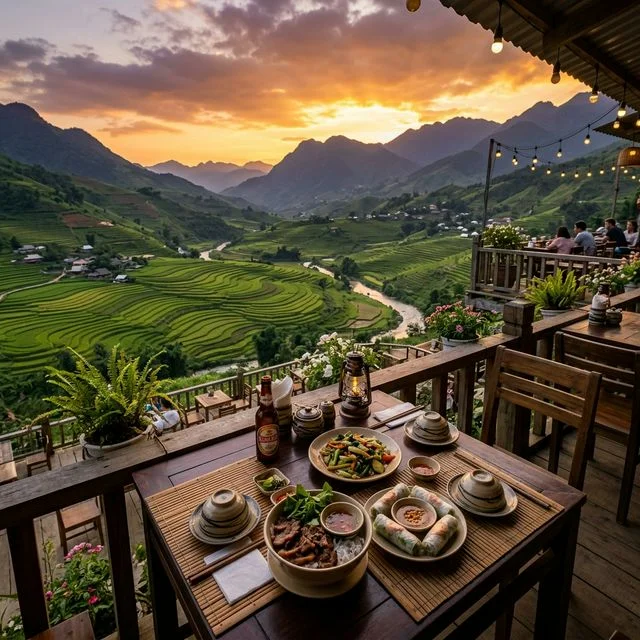
Spring is when light and warmth return to Sapa. From March to May, nature gradually wakes up: fruit trees burst into white and pink blossoms, the rice terraces begin filling with fresh water, and the morning mist grows lighter. It is a season that too many travellers overlook in their rush to catch the golden hues of autumn. Yet spring offers Sapa an intimate and luminous atmosphere, perfect for hiking, meeting village communities, and discovering the region in relative tranquillity.
What is the weather like in Sapa in spring?
In spring, Sapa enjoys mild temperatures between 15 and 22 °C, with light rain in May and morning mist that clears quickly as the day progresses.
Spring is one of the most pleasant seasons to travel to Sapa. Temperatures rise gradually after the winter months without reaching the heavy humidity of the summer monsoon. March remains cool — expect between 12 and 18 °C — but the light is already more generous. April is often the most balanced month: sunny days, cool but not cold nights, and remarkable visibility across the surrounding ridges. In May, the first monsoon rains begin, making the vegetation an intense green while slightly dampening the trails.
| Month | Min Temp | Max Temp | Rainfall | Mist |
|---|---|---|---|---|
| March | 12 °C | 18 °C | Low | Morning |
| April | 15 °C | 22 °C | Moderate | Light |
| May | 18 °C | 25 °C | More frequent | Rare |
Photography enthusiasts will particularly appreciate April's light: soft and diffuse in the morning, sharp and contrasted towards the end of the day. It is the month we most often recommend to travellers who want to combine good weather, comfort and immersion in nature.
What do Sapa's rice terraces look like in spring?
In spring, Sapa's rice terraces fill with fresh water and become giant reflecting pools that mirror the sky and clouds between each tier.
This is one of the most astonishing spectacles the region has to offer, and it remains little known. Between late March and early May, H'Mông and Giay farmers plough the terraces and flood them with water ahead of the first rice planting. The result is spectacular: hundreds of water-filled terraces catching the sky, the clouds and the silhouettes of water buffalo at work. The Muong Hoa Valley, between Lao Chai and Ta Van, is the ideal place to witness this phenomenon. Early in the morning, when mist still clings to the ridges, the sight of those water mirrors is truly breathtaking.
This spring landscape is very different from the golden rice terraces of September and October that circulate on social media, but it has a poetry all of its own — quieter and more intimate. Those who discover it often come back with photographs they count among the finest of their entire trip.
What are the best hikes to do in Sapa in spring?
Spring is the best season for hiking in Sapa: dry trails in March–April, lush vegetation and moderate tourist numbers on the main itineraries.
Walking conditions are excellent in March and April. The trails are not yet waterlogged as they can be in full monsoon, and temperatures allow several hours of comfortable hiking. Here are the routes we recommend most highly in spring:
- Muong Hoa Valley via Lao Chai and Ta Van: the classic must-do. 12 km return from Sapa centre, with a gentle descent through flooded terraces. Allow at least half a day.
- Cat Cat Village: accessible on foot from the town centre (3 km), this is the ideal itinerary for a first half-day. The waterfall and the H'Mông women weaving at traditional looms are well worth the visit.
- Ta Phin and the Red Dao: 12 km north of Sapa, this Red Dao village offers a striking contrast to the more touristy H'Mông villages. Women wear their vivid red embroidered outfits for everyday life, and in spring the medicinal herb gardens are in full bloom.
- Fansipan ascent: if you are in good physical condition, March and April are ideal for attempting the climb on foot. Weather conditions are stable, trails are manageable and crowds are limited.
To plan your activities in detail, visit our complete guide to things to see and do in Sapa, which covers every itinerary by level and by season.
What blossoms can you see in Sapa in spring?
In spring, Sapa's peach, plum and wild cherry trees burst into bloom between March and April, offering some of the most colourful mountain landscapes of the year.
The spring flowering season in Sapa is a remarkable phenomenon that takes place mainly between mid-March and late April. The mountain roads leading to the Tram Ton Pass and the village of Ta Phin are lined with bright pink peach blossoms, white plum trees and, more rarely, wild cherry trees. The effect is stunning — in places it recalls Japan during sakura season, but without the crowds. At local markets, herbalists from the ethnic minorities offer medicinal plants harvested at the start of the season: a good opportunity for exchanges with residents beyond the usual tourist circuit.
Is spring a good time to visit Sapa with family?
Yes, spring is very well suited to families: pleasant temperatures, less challenging trails than during the monsoon, and rich cultural discoveries for children of all ages.
The spring climate — not too hot, not too humid — suits children and senior travellers perfectly. Villages close to Sapa centre (Cat Cat, Lao Chai) are easily accessible, and the colourful regional markets offer vivid sensory discoveries for younger visitors. Spring is also the period when H'Mông and Giay families are most active in the fields, leading to spontaneous and authentic encounters on the trails. We advise avoiding the second half of May if you are travelling with young children, as the first monsoon rains can make some paths slippery.
Ready to experience Sapa in spring?
Parfum d'Automne, our local expert agency, designs tailored itineraries that go beyond the beaten track. We weave the best discoveries from our blog into your personalised journey.