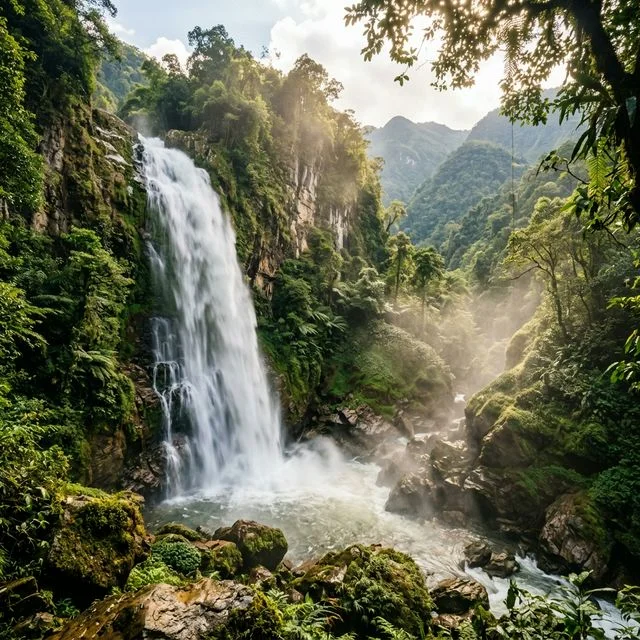
At 1,500 metres above sea level, Sapa is not prepared like a beach destination. Temperatures can vary by more than 20°C between seasons, trekking trails turn slippery under the monsoon, and nights remain cool even in mid-summer. Since 2005, our team at Parfum d'Automne has guided French-speaking travellers on these paths. Here is what our local guides genuinely recommend packing for Sapa.
Why does Sapa require a specific packing approach?
Sapa combines altitude, significant thermal variation and intense humidity, making technical clothing, reliable rain protection and proper footwear essential at any time of year.
Many travellers arrive with bags prepared for Hanoi or Ho Chi Minh City, and find themselves caught off guard by their first evening. Perched at 1,500m, Sapa plays a double game: warm, sometimes sunny days followed by nights that can drop to 5°C in winter. The morning mists, earth trails and flooded rice paddies after rain all call for a different level of preparation.
The most common mistake we see: travelling light at the expense of a mid-layer. In Sapa, a warm fleece or insulating jacket is not optional — not even in April or October.
What clothing should you bring to Sapa depending on the season?
The three-layer system applies in Sapa year-round: a moisture-wicking base layer, a fleece or light down jacket, and a waterproof outer shell that is non-negotiable regardless of the season.
Each season has its specific demands, but a few pieces belong in every bag:
- A technical base layer (merino wool or synthetic) for temperature regulation
- A fleece mid-layer or lightweight down jacket for evenings and early mornings
- A windproof, waterproof shell — mountain showers can arrive within minutes
- One or two pairs of quick-dry trekking trousers
- Merino wool underwear (moisture-resistant and fast-drying)
- A light hat and a thin neck gaiter or scarf
| Season | Temperatures | What to add |
|---|---|---|
| Winter (Dec – Feb) | 3 – 15 °C | Thick down jacket, warm gloves, thick beanie, hand warmers |
| Spring (Mar – May) | 10 – 22 °C | Light rain poncho, flexible layers, sun protection |
| Summer / Monsoon (Jun – Sep) | 15 – 28 °C | Breathable lightweight clothes, poncho, gaiters, insect repellent |
| Autumn (Oct – Nov) | 12 – 24 °C | Light to mid-weight layers, thin waterproof jacket |
To better understand what each period offers before you pack, our detailed guide on when to visit Sapa will help you choose the right travel window.
Packing for winter and spring in Sapa (October to May)
From December to February, Sapa can experience frost and, in some years, snow on the surrounding summits. We recommend a down or synthetic jacket rated for 0°C, waterproof gloves (damp cold penetrates much faster than dry cold), and a beanie that covers the ears. In March and April, morning fog is ever-present: keep your waterproof jacket within easy reach at all times.
Packing for summer and the monsoon in Sapa (June to September)
The monsoon turns trails into rivers of mud. Trekking gaiters become a genuine necessity — they protect against leeches and mud that works its way into boots. Also pack a reliable insect repellent (50% DEET or natural citriodiol-based), ultra-fast-drying clothing, and several changes of base layer. Days are warm but evenings remain cool: keep the fleece in your bag even in July.
What shoes should you choose for trekking in Sapa?
Waterproof, ankle-supporting hiking boots are essential in Sapa, where clay-heavy trails are slippery even during the dry season.
This is the point our guides emphasise above all else: city trainers are not suited to Sapa's terrain. The clay soil of the rice paddies, the slanted paths above the valleys, the moss-covered stones — all of this demands a grippy outsole and ankle support. A Gore-Tex or equivalent membrane is recommended from September through May.
For cultural village visits without long hikes, comfortable trail shoes will do. But if you plan a full day in the Muong Hoa Valley or a foot ascent of Fansipan, investing in a proper pair of hiking boots before you leave home is essential.
What accessories and gear are genuinely useful in Sapa?
High-SPF sun cream, a filter water bottle and a headlamp are useful additions for any Sapa traveller, even outside peak trekking season.
Beyond clothing, a few accessories make a real difference on the ground:
- SPF 50+ sunscreen — altitude amplifies UV rays, even under an overcast sky
- Polarised sunglasses — for reflections on flooded rice terraces and bright winter days
- Filtered water bottle — tap water is not drinkable; a filter bottle saves plastic throughout your stay
- Headlamp — villages around Sapa lack public lighting; essential for evenings at homestays
- Small first-aid kit — plasters, gauze, pain relief, antihistamine
- Compact rain poncho — more practical than an umbrella on steep trails
- Telescopic trekking poles — optional but appreciated on slippery descents
What should you leave out of your Sapa bag?
Hard-shell wheeled suitcases, heavy cotton garments and open sandals are all poorly suited to Sapa, where cobbled streets and dirt paths demand mobility and durability.
A few classic mistakes we see every season:
- Hard-shell wheeled luggage: useless on Sapa's cobblestones and steps — opt for a 40–60L backpack or soft-sided duffel instead
- Jeans and heavy cotton: they take hours to dry, grow heavy in the rain and provide no temperature regulation
- Sandals or flip-flops: even for town walks, wet and sloping streets can be treacherous underfoot
- Too many city clothes: Sapa is a mountain destination, not an urban stay — clothing needs are fundamentally different
If you forgot something, don't worry: Sapa's market is well stocked with hats, gloves, ponchos and fleeces at very reasonable prices. For technical footwear, however, it is best to arrive properly equipped.
Ready to experience Sapa for yourself?
Parfum d'Automne, our local expert agency, crafts tailor-made itineraries that go beyond the beaten path. We integrate the best of our blog into your personalised journey.