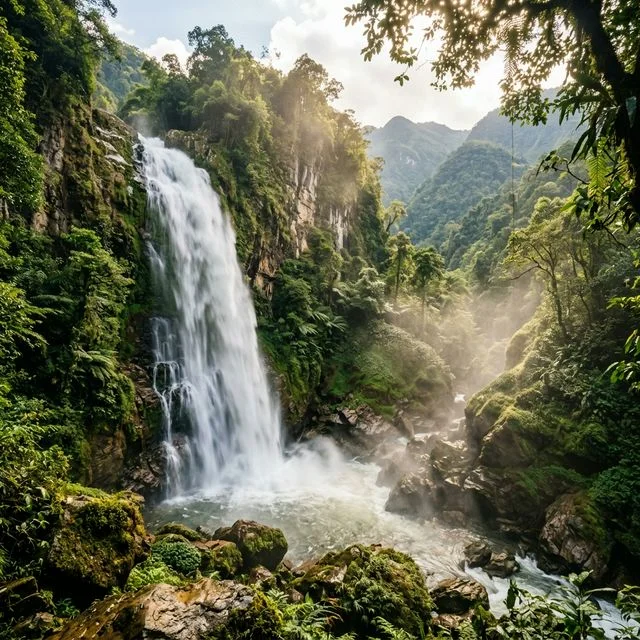
Perched at 1,600 metres above sea level in the mountains of northwestern Vietnam, Sapa undergoes a dramatic transformation from the first days of December. The sky turns grey, temperatures drop, and thick mist settles into the Muong Hoa valley like a curtain of cotton. For travellers willing to trade tropical warmth for a few bracing degrees of mountain cold, Sapa in winter offers something genuinely rare: a mountain village out of season, wrapped in a fairytale atmosphere that few destinations in Southeast Asia can match.
What is the weather like in Sapa in winter?
Sapa's winter (December to February) brings sharp cold, dense mist and temperatures ranging between 2°C and 15°C depending on the month and altitude.
It is the coldest season of the year in this mountain region, and also one of the most surprising. The cold is not the dry cold of a Scandinavian city — it is damp and penetrating, often accompanied by a mist that erases the contours of the landscape at dawn. The rice terraces, emptied after the autumn harvest, turn ochre and golden; when the winter sun manages to break through, they make for some of the most photogenic landscapes in northern Vietnam.
| Month | Min temp. | Max temp. | Rainfall | Mist |
|---|---|---|---|---|
| December | 5°C | 14°C | Low | Frequent |
| January | 2°C | 12°C | Very low | Dense |
| February | 5°C | 15°C | Light | Variable |
Winter rainfall is significantly lower than in summer, meaning less mud on the trails and often more agreeable trekking conditions than people expect. The real challenge of the season is the night cold, which the locals deal with wood fires and travellers with layered clothing.
December in Sapa: first chill and a fairytale atmosphere
In December, Sapa wraps itself in morning mist with temperatures between 5 and 14°C, creating a mysterious ambiance and landscapes of rare, calming beauty.
A sea of clouds at dawn
The most striking phenomenon of Sapa in winter is the sea of clouds. From the heights of Tram Ton Pass or Ham Rong Mountain, the clouds spread out beneath your feet like a motionless lake, leaving only the crests of the surrounding mountains visible above the white. The spectacle rarely lasts more than an hour — you need to rise early, accept the morning cold, and be patient. Those who witness it understand why some travellers return to Sapa every winter.
The Sapa Winter Festival
In December, the town comes alive for the Winter Festival, a privileged moment to encounter the local ethnic minorities in their finest attire. Black H'Mông, Red Dao and Giay people descend from the surrounding villages dressed in embroidered costumes, for demonstrations of traditional songs, dances and games. It is one of the rare occasions to see this cultural richness unfold in a collective, festive setting without any tourist artifice.
January in Sapa: the coldest month, sometimes with snow
January is the coldest month in Sapa, with overnight temperatures close to 2°C and possible snowfall on the surrounding peaks and high-altitude passes.
January is the month that fascinates most. Snow is rare in Sapa even in winter — but it does happen. Some years, Tram Ton Pass, Fansipan and high-altitude villages such as Ta Phin or Sin Chai find themselves blanketed in white, sometimes within just a few hours. Locals and travellers present at such moments agree it is one of the most unexpected experiences Vietnam can offer. It is not a guarantee, but a possibility that makes every January stay uniquely unpredictable. In town, temperatures regularly drop below 5°C at night and mornings can be bitterly cold. Well-equipped hotels offer electric heaters or working fireplaces — worth checking when you book.
February in Sapa: nature wakes up before Tết
In February, Sapa remains cool but the first peach and plum blossoms begin to appear, heralding spring and the Vietnamese Lunar New Year celebrations.
February marks a turning point. The cold persists, but something changes in the light. The peach trees lining the mountain roads burst into pale pink flowers before the leaves even appear — a striking contrast with the brown and misty landscapes of previous weeks. This is also the season of Tết, the Vietnamese Lunar New Year, one of the country's most important celebrations. H'Mông villages celebrate at their own pace: the markets of Bac Ha and Can Cau burst with colour and energy, and the atmosphere is both joyful and deeply authentic. Visiting Sapa during Tết requires advance planning — accommodation books up early and some services are reduced — but the experience is well worth the effort.
What can you do in Sapa in winter?
Winter in Sapa is perfect for cloud-watching at altitude, walks through H'Mông villages and the Fansipan cable car, all in a calm atmosphere with far fewer crowds.
Contrary to popular belief, winter is not a quiet season in Sapa — it is simply a different season, with its own particular rewards. Here is what we recommend most highly:
- Cloud-hunting from altitude: Tram Ton Pass, Ham Rong Mountain or the Sin Chai plateau. An early start is essential.
- Low-altitude villages: Cat Cat, Ta Van and Lao Chai remain accessible on foot even in winter. The paths are dry and the locals welcoming.
- Fansipan by cable car: on a clear day, the panorama from the roof of Vietnam (3,143 m) is breathtaking. In misty conditions, the experience takes on a mystical quality that is equally captivating.
- Seasonal gastronomy: winter is the best time to try salmon hotpot (lẩu cá hồi) or wood-fire-grilled black pork — two local specialities that warm body and soul alike.
To plan a well-rounded itinerary according to your interests and the exact dates of your visit, explore our complete guide to things to do in Sapa, which covers every experience by season.
How to prepare for the cold in Sapa?
To handle Sapa's winter cold, pack multiple clothing layers, a waterproof jacket, gloves and a warm hat — essential from 1,500 metres of altitude onwards.
The golden rule in Sapa in winter: layers. The principle is simple — it is always better to be able to remove clothing during the day than to run short of it at night. Here is our field-tested packing list:
- Thermal base layers (essential from January onwards)
- Wool or fleece mid-layers
- Warm, waterproof outer jacket (the wind at Tram Ton Pass is deceptive)
- Hat, gloves and scarf
- Waterproof hiking boots with good grip
- Small headlamp for pre-dawn outings
If you arrive underprepared, Sapa has plenty of shops selling warm local clothing at reasonable prices — including H'Mông knitted jumpers and waistcoats that make for genuinely meaningful souvenirs.
Ready to experience Sapa in winter?
Parfum d'Automne, our local expert agency, designs tailor-made itineraries that go off the beaten track. We bring the best of our blog insights into your custom journey.