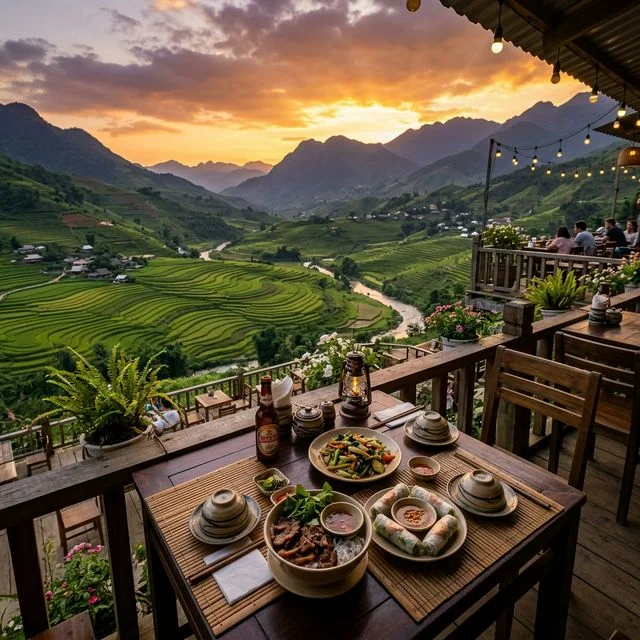
Summer is probably Sapa's least understood season among international travellers. Many avoid it for fear of rain, yet it actually offers deep green landscapes, unique changing light, and a dramatic drop in tourist numbers. It is also, to be honest, the most delicate period for trekking: trails become slippery, storms can be fierce, and some secondary paths are temporarily impassable. From June to August, Sapa enters the northern Vietnamese monsoon. We accompany travellers on the ground every summer and we know this season can be magnificent — provided it is well prepared.
What is the weather like in Sapa in summer?
Summer in Sapa is cool and humid, with temperatures between 17 and 25 °C and frequent rainfall, especially in July and August.
Contrary to what many people imagine, Sapa does not experience the stifling heat of the Red River Delta in summer. Its 1,500-metre altitude keeps temperatures pleasant, even in the middle of August. Days alternate between bright spells and sudden showers, often turning stormy in the late afternoon. June remains relatively dry, with more spaced-out rain. July and August are significantly wetter: it can rain for several hours in a row, often at night or in mid-afternoon. Mist settles quickly on the ridges, giving the region an almost unreal atmosphere while sometimes limiting views over the panoramas.
| Month | Min Temp | Max Temp | Rainfall | Atmosphere |
|---|---|---|---|---|
| June | 19 °C | 25 °C | Moderate | Lush green terraces |
| July | 18 °C | 24 °C | Heavy | Mist and rain |
| August | 17 °C | 23 °C | Very heavy | Deep green |
Nights remain cool year-round in Sapa, even in summer. A light jumper or thin fleece is still useful in the evening, particularly if you stay in a homestay in the valley, where traditional houses have no heating.
Is monsoon trekking in Sapa actually a good idea?
Yes, trekking in Sapa in summer remains a beautiful experience, provided you choose shorter routes, good equipment and a guide who knows the terrain.
The honest answer is nuanced. Trekking during the monsoon is neither impossible nor reckless, but it calls for tighter preparation than in the dry season. The main trails in the Muong Hoa Valley remain passable even after heavy rain, thanks to regular foot traffic from local villagers and water buffalo. However, some secondary paths, such as those leading to Giang Ta Chai or Ban Ho, become slippery and occasionally dangerous after several days of downpours. The field experience we have built since 2005 lets us adjust each itinerary in real time, based on trail conditions and local forecasts.
Here are the key points to keep in mind if you are considering a summer trek:
- Favour 2- to 4-hour treks rather than long day-hikes, so you can take shelter quickly if a storm breaks.
- Start early in the morning: storms often arrive in mid-afternoon, and morning light is usually the most stable.
- Do not trek alone off the main trails. A local H'Mông or Dao guide knows the safe shortcuts and immediately recognises risk zones after a surge of rain.
- Keep flexibility in your plans: a day of heavy rain sometimes justifies shifting a hike, not cancelling the trip.
Which treks should you prioritise in Sapa in summer?
In summer, we recommend short treks in the Muong Hoa Valley, visits to nearby villages, and taking the cable car up Fansipan rather than climbing on foot.
Some itineraries cope with the monsoon far better than others. We systematically guide our summer travellers toward routes with stable infrastructure and quick exits in case of storm. Cat Cat Village, 3 km from Sapa centre, remains a safe choice even under rain: the path is largely paved and you can turn back at any time. The descent to Lao Chai and Ta Van in the Muong Hoa Valley also works well in summer: the terraces display a striking electric green that regular travellers rarely photograph. For those who love viewpoints, the cable car up Fansipan is particularly worthwhile at this time of year, since it allows you to cross the cloud layer and, with a bit of luck, emerge above a sea of clouds at the summit.
For a detailed overview of itineraries and difficulty levels, take a look at our complete guide to things to see and do in Sapa, which we update each season with feedback from our field guides.
How should you equip yourself for monsoon trekking in Sapa?
Good summer trekking gear for Sapa combines waterproof grippy shoes, a light poncho, a protected backpack and fast-drying clothing.
The quality of your equipment often makes the difference between a memorable hike and an ordeal. Humidity is constant in summer, which makes cotton clothing impractical. We recommend synthetic fabrics or merino wool, which dry quickly and regulate perspiration. Shoes are the critical item: a deeply lugged sole and water-repellent treatment are essential on the muddy trails of the Muong Hoa Valley. A large rain poncho covering both your body and your backpack is often more practical than a classic waterproof jacket in a tropical downpour. Also think about a waterproof pouch or cover for your camera, phone and passport.
Our guides systematically run an equipment briefing before every trek departure. On the ground, several shops in central Sapa rent ponchos and trekking poles at reasonable prices if you haven't brought everything with you.
What are the real advantages of visiting Sapa in summer?
Summer in Sapa brings vivid green rice terraces, spectacular waterfalls, far fewer tourists and accommodation rates often well below autumn prices.
Despite the rain, summer has real strengths that deserve consideration. It is the season when rice terraces reach their peak vitality: the plants grow fast and paint the valley a brilliant green that precedes, a few weeks later, the golden yellow of harvest. Regional waterfalls like Thac Bac or Love Waterfall are at their most impressive. Visitor numbers drop sharply in June–August compared with September–November, making for a far more peaceful experience in ethnic villages and on the trails. Finally, many hotels, boutique hotels and homestays offer softer summer rates, sometimes 20 to 30 % below the high-season price. For travellers who value authenticity over perfect weather, summer remains an underrated but rewarding option.
Ready to experience Sapa in summer?
Parfum d'Automne, our local expert agency, designs tailored itineraries that go beyond the beaten track. We weave the best discoveries from our blog into your personalised journey.