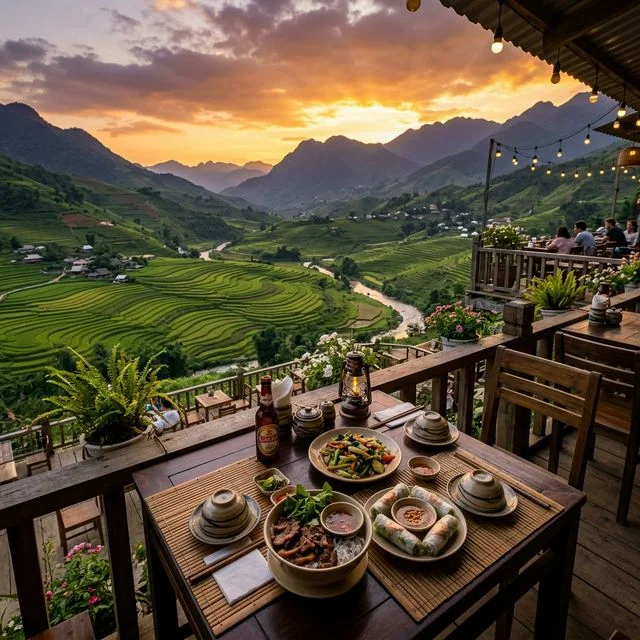
At 1,600 metres above sea level, Sapa plays with the elements in ways that surprise even the most prepared travellers. In a single day, you can walk through a morning of thick mist, enjoy a sun-drenched afternoon on the rice terraces, and retreat to a warm fire as the evening turns cold. This complete weather guide, built from twenty years of field experience by our Parfum d'Automne team, gives you everything you need to pick the ideal month for your trip.
What is the general climate of Sapa?
Sapa has a subtropical mountain climate, with an average annual temperature of 15 °C and four distinct seasons that differ greatly from the rest of Vietnam.
Unlike Hanoi or the coast, Sapa does not follow Vietnam's typical tropical pattern. The altitude erases the sweltering heat of the Red River Delta and sets its own rhythm: cold winters (occasionally close to freezing), mild and flowery springs, a generous rainy season between June and August, and a golden autumn that is often the most beautiful time of year. Mist is an integral part of the landscape, particularly between November and March, lending the area the mysterious atmosphere that has made it famous.
One thing we always remind our travellers: standard weather forecasts for Vietnam do not apply to Sapa. Always check data specific to the town's altitude, as the difference with Lao Cai (in the valley, at 200 m) can reach 10 °C on the same day.
What are the temperatures in Sapa month by month?
Temperatures in Sapa range from 3 °C in January to 24 °C in July, with significant daily swings throughout the year.
Here are the average climate figures for each month, drawn from our field experience and local meteorological records:
| Month | Min temp (°C) | Max temp (°C) | Rainfall (mm) | Conditions |
|---|---|---|---|---|
| January | 3 | 12 | 40 | Cold, dense mist, possible snow at altitude |
| February | 5 | 14 | 45 | Cold, cherry blossoms, morning mist |
| March | 8 | 17 | 55 | Mild, plum and peach trees in bloom |
| April | 12 | 20 | 80 | Pleasant, lush green terraces, occasional showers |
| May | 16 | 22 | 130 | Warm and humid, start of seasonal rains |
| June | 18 | 23 | 220 | Rainy season, flooded terraces, intense green |
| July | 19 | 24 | 310 | Wettest month, swollen waterfalls, lush landscapes |
| August | 19 | 24 | 295 | Still very wet, transition towards golden season |
| September | 17 | 22 | 180 | Transition, first golden hues on the rice terraces |
| October | 14 | 20 | 100 | Golden rice terraces, ideal season, clear skies |
| November | 10 | 17 | 65 | Mild, post-harvest, peaceful golden landscapes |
| December | 5 | 13 | 45 | Cold and misty, wintry and atmospheric |
These are averages. In practice, we have recorded temperatures dropping to −2 °C on January nights, and October days reaching 25 °C under a perfectly blue sky. The mountain remains unpredictable — which is precisely what gives it its character.
What is the best time to visit Sapa?
September–October and March–April are the two ideal windows for visiting Sapa, offering clear skies, comfortable temperatures and outstanding scenery.
Every season has its own appeal, and the best choice depends on what you are looking for.
In September and October, the rice terraces transition from deep green to brilliant gold as the crop ripens. This is the most photographed, most celebrated season — and rightly so. The Muong Hoa Valley landscapes reach an almost surreal beauty. Temperatures are comfortable (14 to 22 °C), rainfall decreases, and many days offer completely clear skies. This is our top recommendation for a first visit.
In spring (March–April), the region awakens under an explosion of blossom: plum, peach and cherry trees drape the hillsides in white and pink. The terraces begin to be flooded for rice planting, creating beautiful reflections. Temperatures are pleasant (8 to 20 °C) and rainfall is still moderate.
For those who want to explore Sapa in depth according to the time of year, we have written a dedicated guide detailing the activities recommended for each season.
Does it snow in Sapa?
Yes, it snows in Sapa, usually between December and February, but it remains rare and unpredictable, mainly occurring at the highest elevations around Fansipan.
Snow in Sapa is an event that electrifies the whole town. We have seen it fall spectacularly in some winters, blanketing the rice terraces in white for a few hours before melting with the first rays of sun. It mainly affects the mountain passes and summits above 2,000 metres — the slopes of Fansipan in particular.
In the town itself, at 1,600 m, snow remains exceptional. What you will see more often is morning frost on the leaves and an icy mist wrapping around the villages. Some years — notably 2016 and 2021 — saw notable snowfall right down to the centre of Sapa, drawing visitors from across Vietnam eager to witness the spectacle.
If snow is what you are hoping for, plan your stay in January or early February — no guarantees, but plenty of magic either way.
What should you pack for Sapa depending on the season?
The layering principle applies in Sapa all year round: even in summer a light jacket is essential in the evenings, and in winter warm, waterproof gear is a must.
Here is what we recommend depending on when you visit:
- Winter (December–February): warm coat, thermal base layer, hat, gloves, waterproof boots with grip. Do not underestimate the damp mountain cold, which bites far more than dry cold.
- Spring (March–April): light jacket or fleece, t-shirts, hiking trousers, compact rain jacket in your pack. Mornings remain cool.
- Rainy season (May–August): breathable light clothing, rain jacket or poncho, closed shoes that handle wet conditions. Avoid open sandals for treks in the rain.
- Autumn (September–November): light layers (t-shirt + jacket), long trousers, hiking shoes. Evenings cool down quickly from October onwards.
For a complete packing list tailored to each season, we have put together a guide on what to bring for a stay in Sapa at altitude.
Ready to experience Sapa for yourself?
Parfum d'Automne, our local expert agency, crafts tailor-made itineraries that go well beyond the beaten track. We bring the insights from our blog directly into your trip.