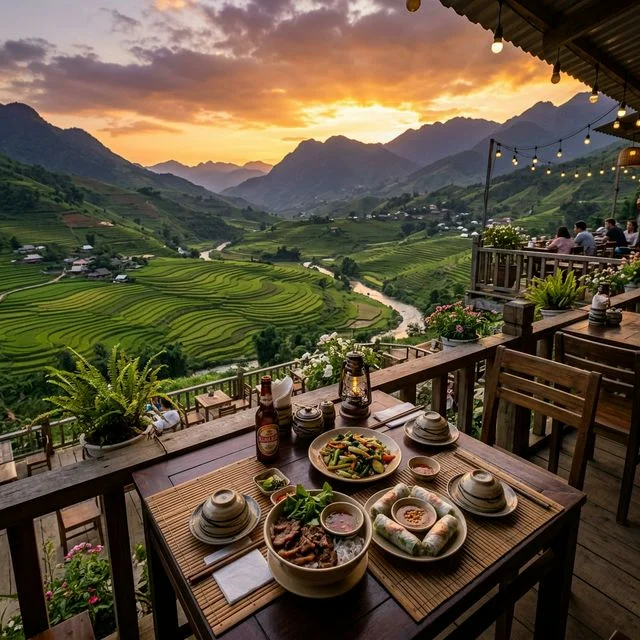
Sapa is one of the most photogenic destinations in Southeast Asia. From the terraced rice fields cascading down into the valley, to the ethnic villages with their vivid traditional dress, and the morning mists that settle around the mountain peaks — every hour of the day offers a different picture. Here is our pick of the best photography spots, along with the field tips we share with travellers we have been guiding since 2005.
Why is Sapa a paradise for photographers?
Sapa packs spectacular rice terraces, preserved H'Mong and Dao villages, and exceptional mountain light into fewer than 20 square kilometres, all year round.
What makes Sapa unique for photography is the layering of elements: the steep geography creates natural perspectives impossible to find elsewhere, while the permanent presence of ethnic communities adds a vivid human dimension. The north of Vietnam — and the Sa Pa district in particular — concentrates a rare density of photographic subjects: landscapes, portraits, traditional architecture, and scenes of agricultural life.
We regularly accompany amateur and semi-professional photographers in the region. Their feedback is almost always the same: they come back with far more usable shots than from elsewhere in Vietnam, because subjects are everywhere and the high-altitude light is exceptional in quality.
What are the best photography spots in the Muong Hoa Valley?
The Muong Hoa Valley, between Lao Chai and Ta Van, offers Sapa's finest rice terraces — best photographed at dawn to capture reflections and morning mist.
This is THE unmissable spot. The road descending from Sapa town towards Lao Chai and then Ta Van runs alongside dozens of terrace levels that step down over several hundred metres of elevation. Depending on the season, the rice fields change dramatically in appearance:
- April–May (flooded season): the terraces are inundated before transplanting. The water mirrors the sky and clouds, creating spectacular reflections — especially at sunrise.
- June–August: the rice plants grow and the terraces turn a deep, vivid green. The light after rain is often magnificent, with rays breaking through cloud cover.
- Mid-September: harvest approaches and the terraces take on golden and amber hues. This is the period most sought after by photographers.
Our field tip: take a moto-taxi from Sapa down to the valley by 6 a.m. You'll have two to three hours of soft light before the tour groups arrive.
Where should you photograph ethnic villages and portraits?
Ta Phin village, 12 km from Sapa, is one of the best places to photograph Red Dao women going about their daily lives in a completely natural setting.
For portraits and scenes of everyday life, a few locations stand out:
- Ta Phin: a Red Dao village off the main tourist circuit. Women here wear their embroidered headdresses and indigo clothing as part of daily life. Morning light filtering through the stilt houses is ideal for natural-light portraits.
- Cat Cat: 3 km from the town centre, this Black H'Mong village is reachable on foot. The waterfall below provides a polished natural backdrop, while the village lanes offer interesting textures and colours in late afternoon.
- Sapa Sunday market: the weekend market draws vendors from every ethnic group in the region. It is a prime opportunity to photograph H'Mong, Tay, Giay and Dao traditional costumes side by side, in a soft indoor light that works well early in the morning.
One rule we observe scrupulously with our travellers: always ask permission before photographing someone. A smile, a gesture, a few words in Vietnamese are enough to establish contact — and the photos you take afterwards are always more authentic and more beautiful.
What are the best panoramic viewpoints around Sapa?
Tram Ton Pass, at 1,900 metres on the road to Lai Chau, is the highest road pass in Vietnam and offers 360-degree panoramas over the northern massifs.
For big landscapes and open views, these are the spots we consistently recommend:
- Tram Ton Pass (O Quy Ho): the road climbing from Sapa towards Lai Chau crosses this spectacular pass. At dawn, a sea of clouds often spreads below the col with mountain peaks emerging above. The sunset is equally striking.
- Fansipan Summit: by cable car or on foot, the Roof of Indochina (3,143 m) offers views across dozens of summits. In winter and spring, the sea of clouds below the peak creates a photographic spectacle unlike anything else.
- Moana Sapa: this café perched on a promontory above the valley has become a must-visit photography spot. The swing suspended above the rice fields and the plunging views below are particularly sought after during golden hour.
To explore these sites in the best possible conditions, we often include very early morning departures in our 3-day Sapa tours, allowing guests to enjoy sunrise light on the pass before other visitors arrive.
What time should you go out for the best photos in Sapa?
Sapa's two golden hours are sunrise between 5:30 and 8 a.m., and golden hour in the evening between 4:30 and 6 p.m., when raking light sculpts the terraces beautifully.
Mountain light in Sapa has a particular quality: the altitude naturally filters the harsh midday sun but delivers warm, soft tones at the boundary hours. A few practical benchmarks:
| Time | Light Quality | Best Spots |
|---|---|---|
| 5:30–8 a.m. | Golden raking light, morning mist | Muong Hoa Valley, Tram Ton Pass |
| 8–11 a.m. | White light, strong contrasts | Ta Phin and Cat Cat villages |
| 11 a.m.–3 p.m. | Harsh light (avoid in summer) | Indoor craft scenes, house interiors |
| 4:30–6 p.m. | Golden hour, long shadows | Moana Sapa, Lao Chai terraces |
In winter (December–February), mist can linger all day. This is not necessarily a problem for photography: it creates mysterious atmospheres and very distinctive depth effects across the terraces.
What gear should you bring to photograph Sapa?
A versatile 24–70 mm lens covers most situations in Sapa: wide-angle landscapes, village scenes, and portraits from a respectful distance.
A few practical points to plan for before you leave:
- Spare battery: mountain cold (sometimes 5°C in winter) drains batteries very quickly. Bring at least one spare, fully charged the night before.
- Moisture protection: frequent mist and fog can cause condensation on lenses. A microfibre cloth and a weatherproof bag are essential.
- Lightweight tripod: useful for long exposures at dawn on the flooded terraces (April–May) or for shooting in the darker lanes of village streets.
- Telephoto lens (70–200 mm): invaluable for portraits from a respectful distance in markets, without intruding on the personal space of local people.
In Sapa, trekking trails can become muddy after rain. Protect your equipment and wear appropriate footwear, especially if you are heading to the terraces at dawn.
Ready to experience Sapa for yourself?
Parfum d'Automne, our expert local agency, crafts tailor-made itineraries that go beyond the beaten track. We weave the highlights from our blog into your personalised journey.